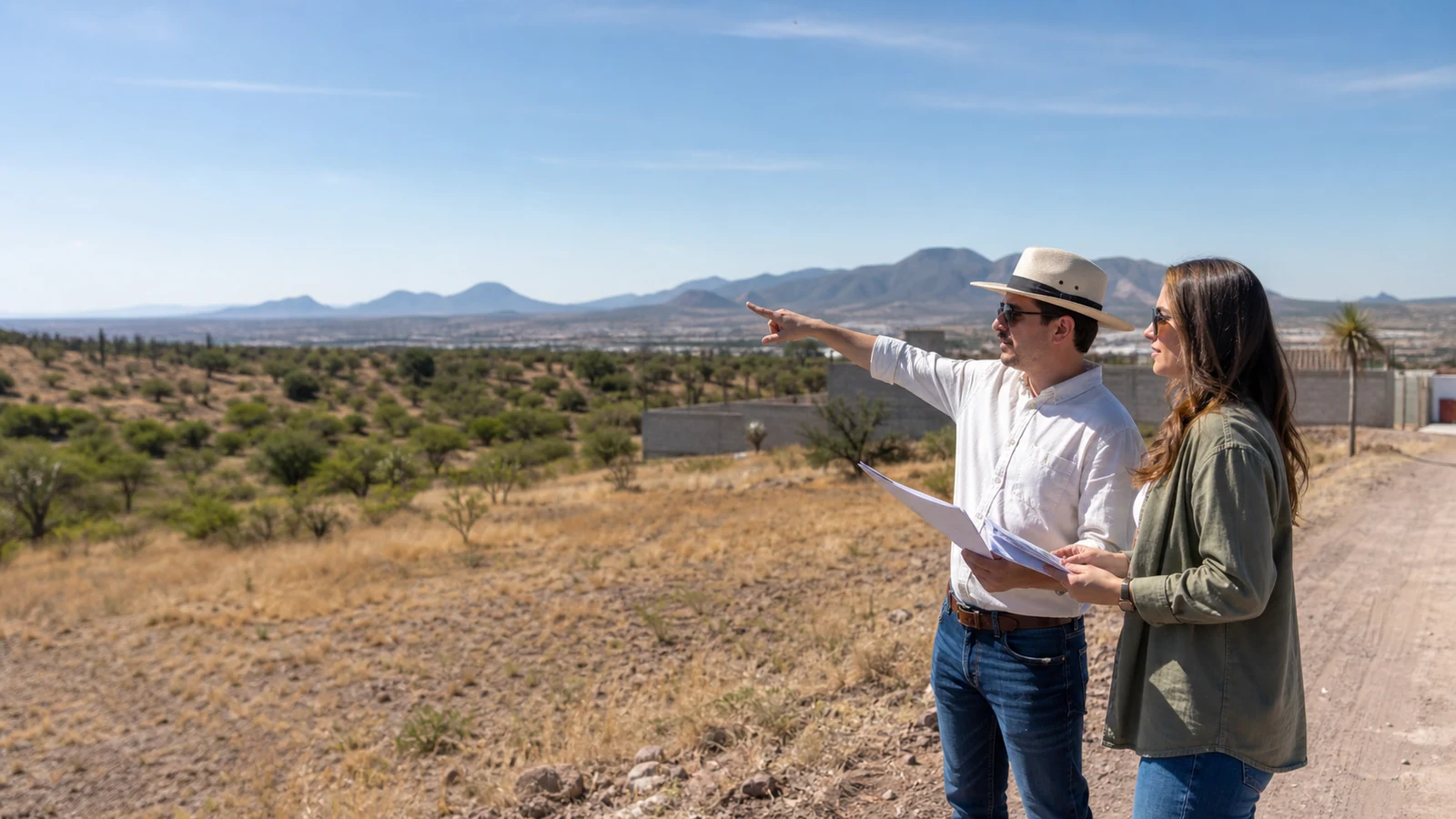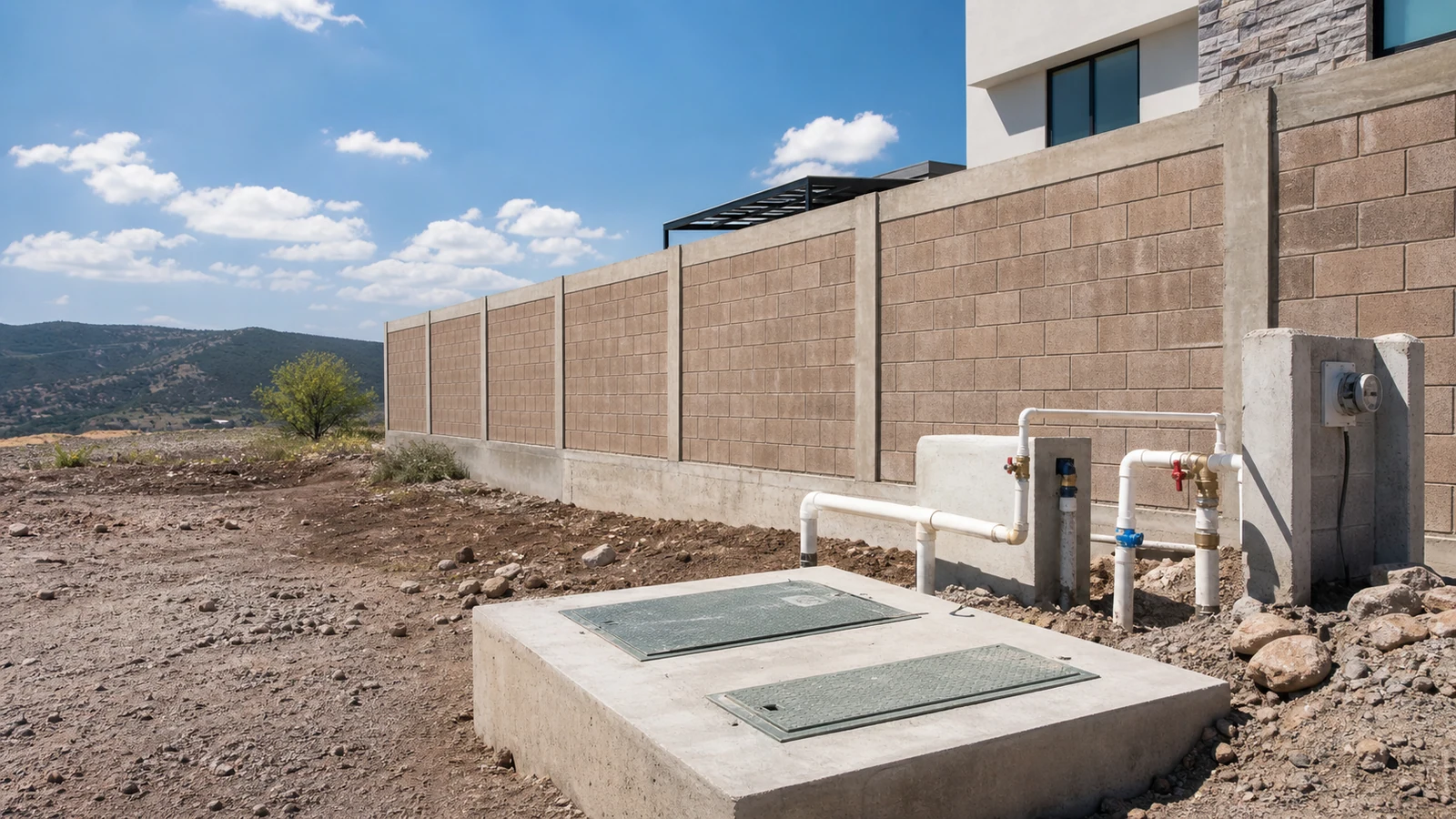
Exterior work is also construction
Perimeter wall, cistern, hookups, interior sidewalks and patio preparation often appear as late expenses. However, they affect safety, operation and handover.
Including them from the start avoids improvised decisions at the end.
Line items to consider
- Perimeter wall, gate, access and protections.
- Cistern, pump, water tank and utility boxes.
- Hookups, meters and interior connections.
- Leveling, stormwater drainage and functional patios.
Smart priority
If budget is limited, prioritize what allows safe and functional occupancy. Decorative elements can wait.
Measure scope with plans and site conditions
For the wall, record length, height, grade changes, foundation type, finish, joints, gates and connections to neighboring work. For the cistern, define capacity from use and supply, location, maintenance access, equipment and connection. Utility hookups need distances, diameters, conduits, meters and reinstatement work.
A unit or linear-meter rate helps only after these variables are clear. Request quantities and assumptions so the project can change without losing sight of what changed the cost.
Include work that enables operation and maintenance
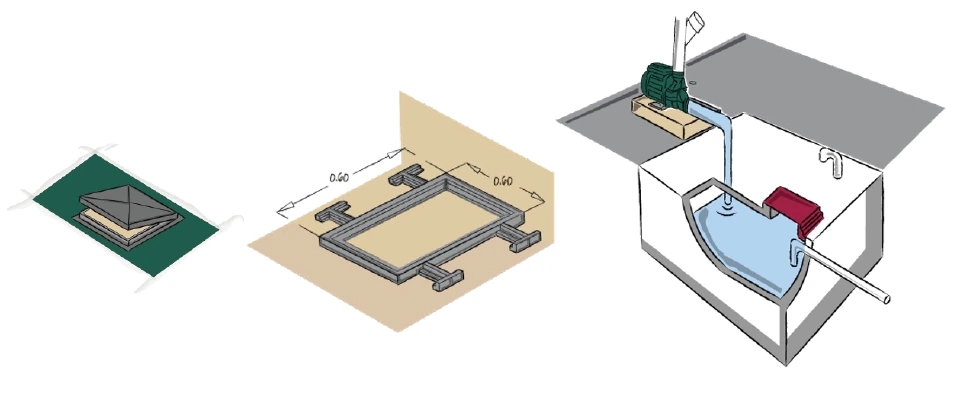
The budget should include excavation, removal, backfill, waterproofing, testing, protection and cleaning, not only the finished element. Add accessible boxes, valves, overflow, ventilation and surface drainage where applicable. Rainwater collection, if considered, needs a defined system separated from potable water.
- Separate essential work, future preparation and decorative finish.
- Identify permits or fees outside the contractor's price.
- Include watertightness and operation tests before closing work.
- Set a contingency tied to specific site risks.
Schedule by dependency to avoid rework
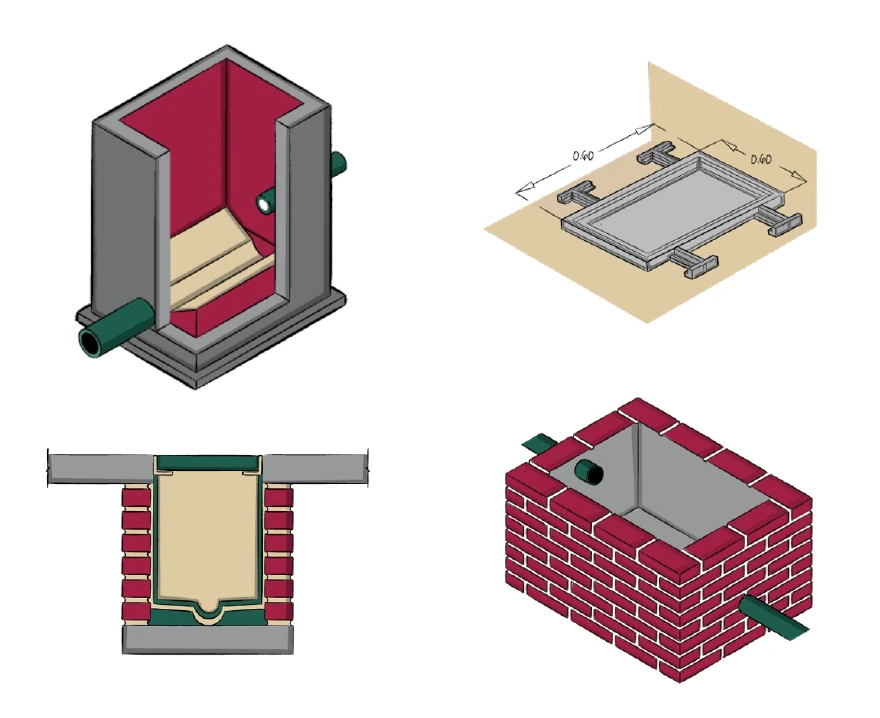
Coordinate the cistern, drainage and hookups before paving, landscaping or finishes that would need reopening. Define equipment access and material delivery before closing the perimeter. Mark which activity releases the next and which inspection must be documented.
At handover, request final plans, equipment sheets, warranties and photographs of concealed pipes or conduits. A complete budget is not the one with the most line items; it is the one that makes scope, sequence, exclusions and later maintenance understandable.
Budget every system until it can be used
For the boundary wall include foundations, structure, joints, finish, gate and connections with neighbors. For water storage include excavation, tank, pump, controls, piping, overflow and cleaning access. For utilities include the contract, fees, meter, conduit, interior connection and sidewalk repair. Pricing the main item omits work required for operation.
Draw how access covers, trees, parking, gas and runoff will share the site. Require quantity, unit, price, scope and exclusions in every proposal. Add supervision, testing and an explained contingency. Sequence work by dependency so a finished wall or pavement does not need to be opened for a missing line.