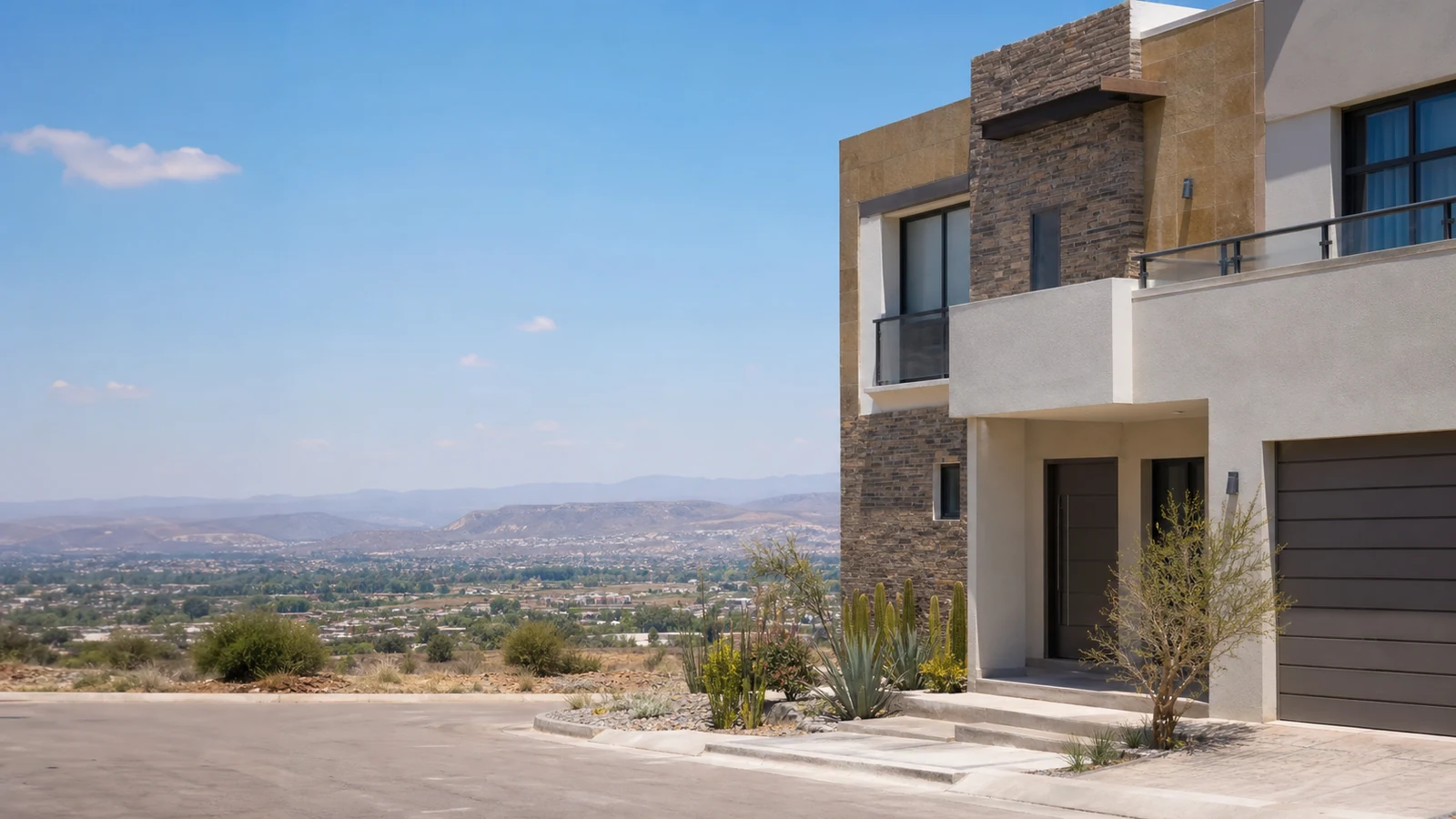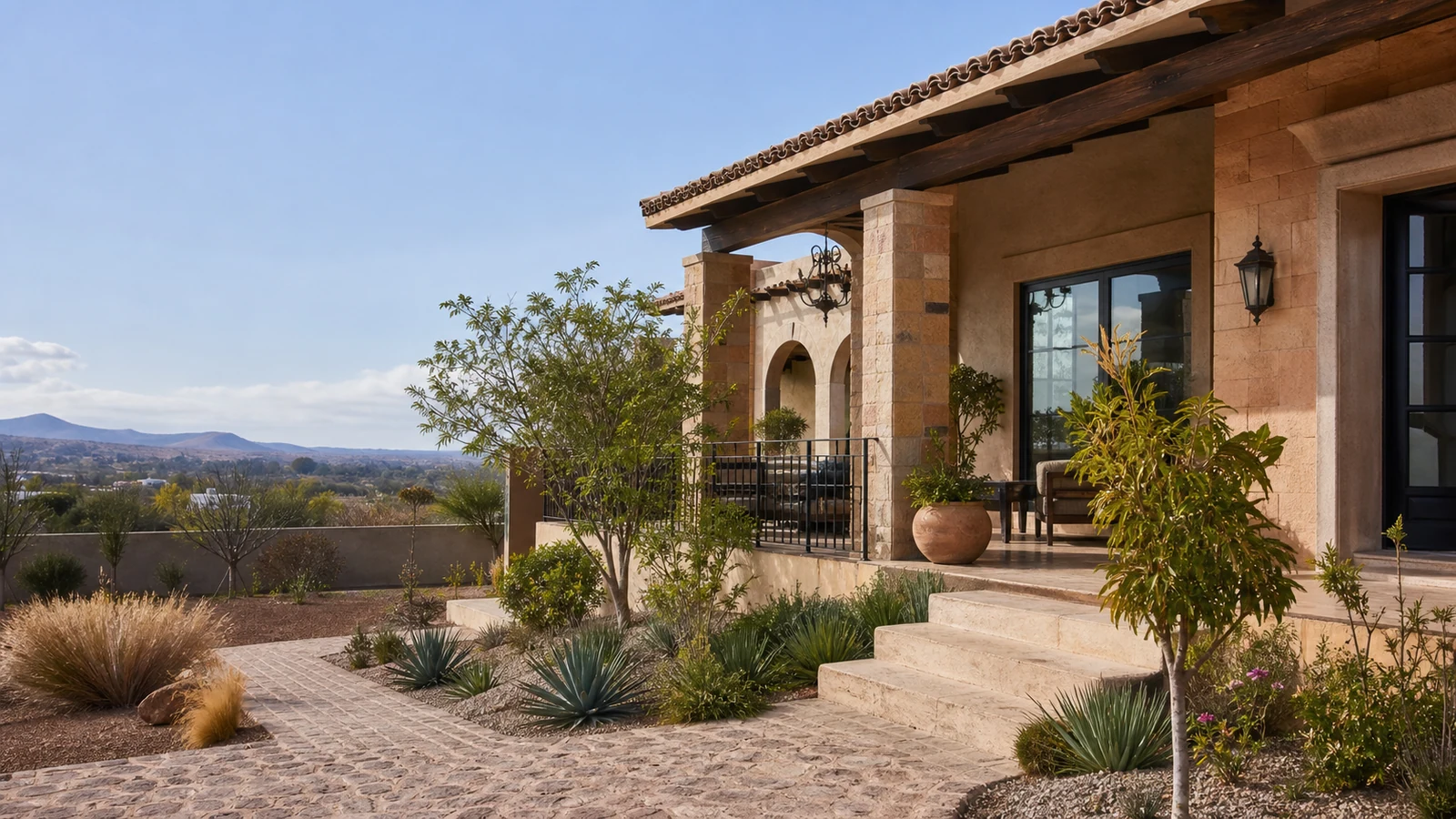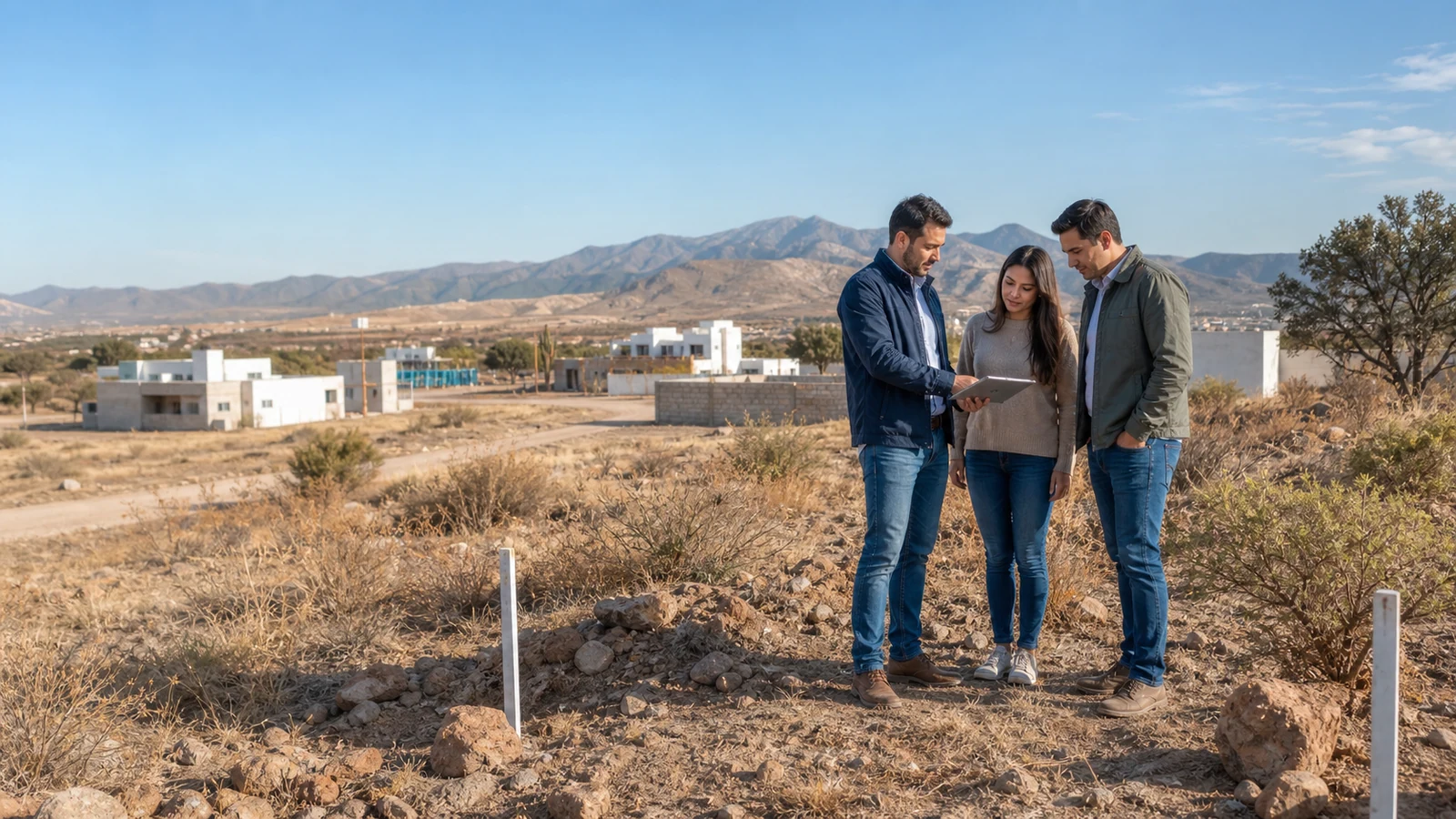
What you see on site matters as much as price
A lot may look attractive because of location or monthly payment, but the physical visit reveals costs that rarely appear in a listing. Look at road access, runoff, nearby utility poles, planned sidewalks and clear boundary markers.
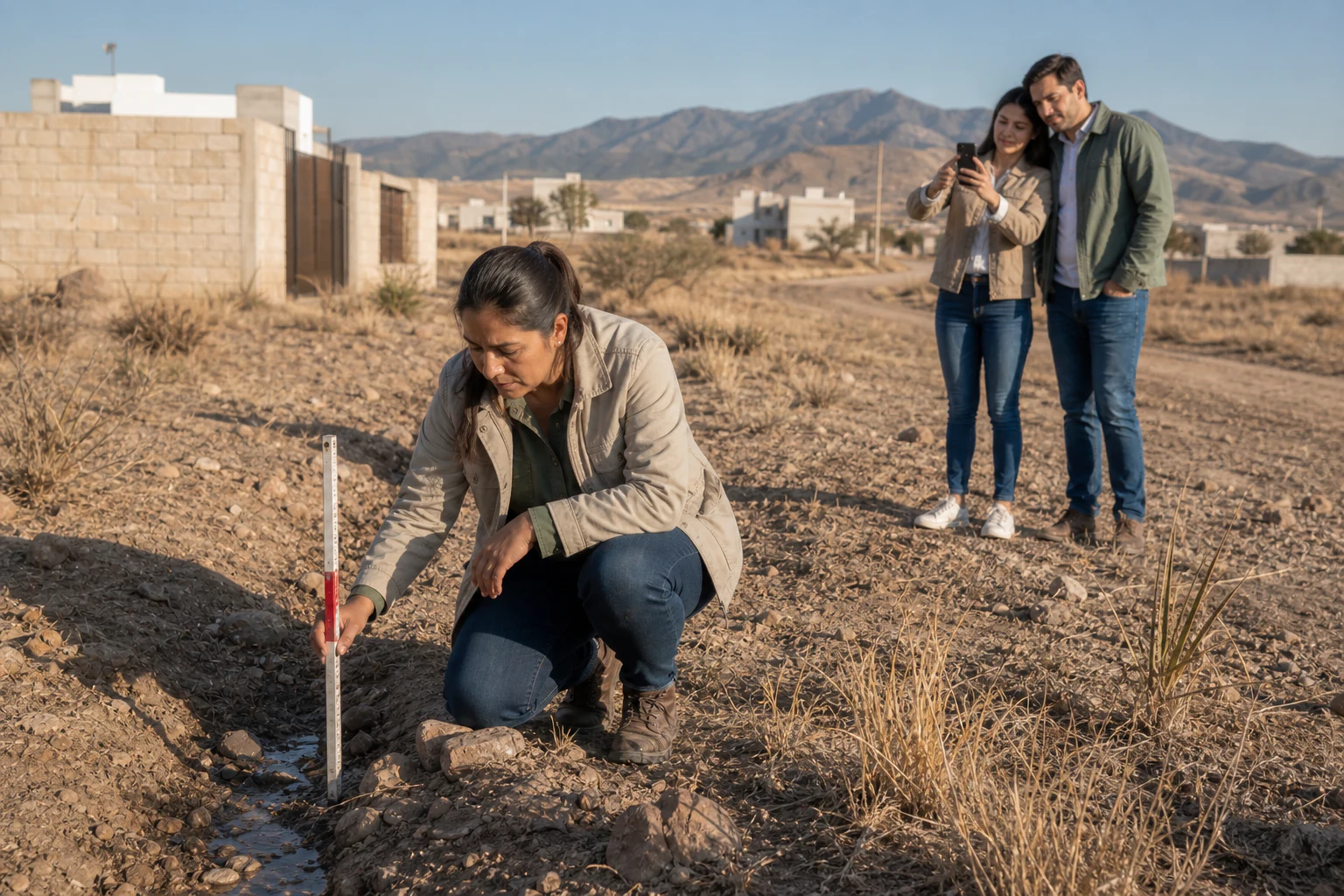
Take photos, save the map location and bring a short list of questions. If something cannot be explained on site, resolve it before making a deposit.
Quick review during the visit
- Compare approximate dimensions with the plan or sketch.
- Ask about water, drainage, power and realistic connection dates.
- Identify slopes, fill, neighboring walls and possible runoff.
- Check access, future streets and distance to everyday services.
| Inspection point | What to observe | Evidence to keep | Reason to pause |
|---|---|---|---|
| Access | Open street, road surface and actual lot entrance | Route photos and saved map location | Access requires crossing someone else's property |
| Utilities | Poles, service boxes, meters and nearby connections | Photos and written utility-feasibility response | Dates are only verbal and no one is accountable |
| Dimensions and boundaries | Markers, walls and consistency with the sketch | Annotated plan and photos from every corner | The visited lot does not match the plan |
| Slope and runoff | Grade changes, fill and low points | Panoramic photos and the direction of water flow | Water drains toward the lot or future home |
| Surroundings | Neighboring uses, noise, lighting and road safety | 360° video and actual travel times | An incompatible activity or unsafe access is present |
| Document identification | Lot, block, area and official numbering | Sheet with the exact property identifier | The land cannot be linked to a specific file |
After the visit
Request documents before deciding: seller identification, deed or legal background, plan, applicable ownership regime and reservation agreement. A good advisor does not pressure you; they organize information so you can buy calmly.
Prepare the visit with verifiable information
Before visiting, request the exact location, dimensions, orientation, current price and a readable copy of any available plan or sketch. Keep that information on your phone and bring a short checklist for recording differences. The visit should test the listing against the actual site: real access, boundary references, utility poles, service boxes, open streets and neighboring occupancy. A single photograph does not replace a complete walk-through or establish legal boundaries.
Keep the physical and document reviews separate
What you observe on site should later match the file. Compare dimensions and location with the ownership record, cadastral information and proposed contract. Ask who is selling, what authority they have and which document identifies the exact lot. If the area, numbering or boundaries do not match, request clarification before paying. This review is informational; a notary or qualified professional should assess the legal position of a specific transaction.
Record the costs and questions revealed by the visit
Note slopes, fill, runoff, distance to utility connections, fencing needs and road conditions. These items can change the preparation budget even when the land price stays the same. End the visit with a simple record: evidence collected, documents received, unanswered questions, the person responsible for follow-up and a target date. Comparing two or three lots with the same format prevents memory or sales pressure from driving the decision and shows what remains unresolved before a deposit.
Make a second visit with a specific question
Location and first impressions usually dominate the initial visit. Return with the plan, a tape or laser measure, suitable shoes and enough time to walk the boundary. Look for differences between the offer and the site: open access, visible utility covers, grade changes, fill, runoff, poles and neighboring occupation. Take photographs from points you can identify later.
End the walk with a short findings list. For each item, record who must explain it, which document can confirm the answer and when you will receive it. A verbal promise about utilities, grading or boundaries is weak evidence when comparing options. Useful information agrees across the site, plan, contract and property file.