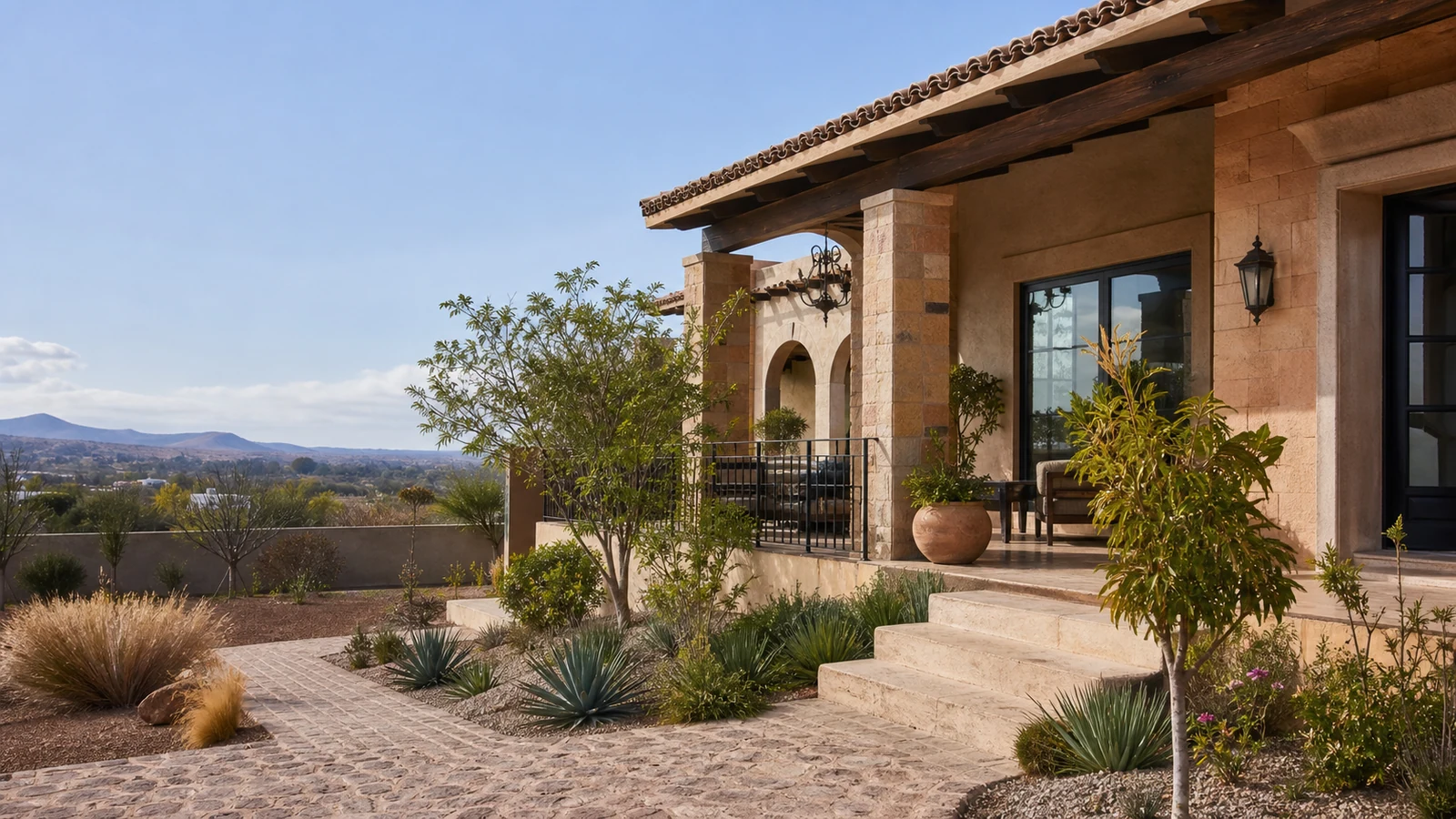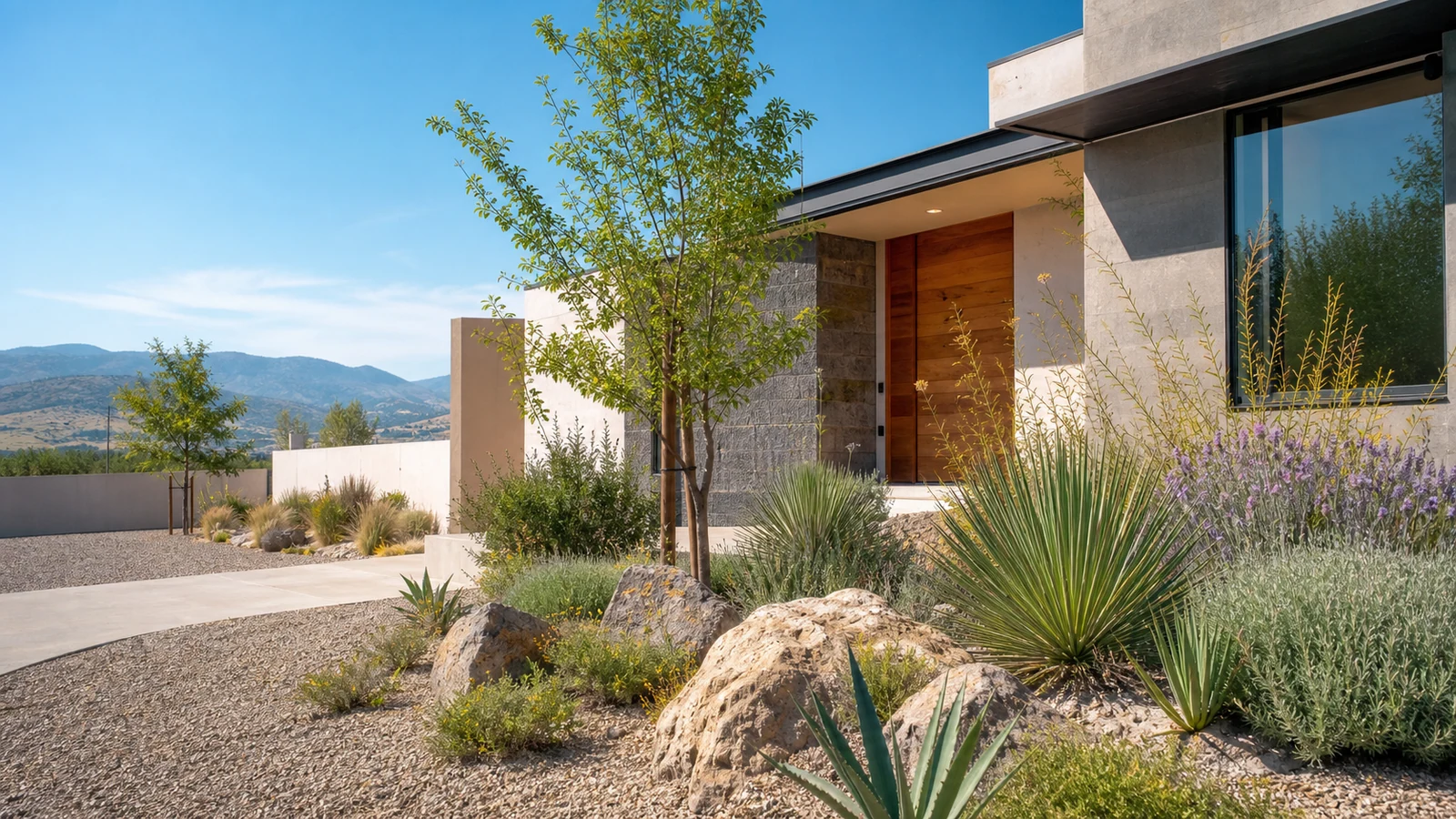
Less water does not mean less design
Low-water gardens use resistant plants, suitable soils and strategic shade. Their goal is to bring life outside without becoming a maintenance burden.
In Durango, this trend combines aesthetics, comfort and practical responsibility.
Useful components
- Plants adapted to dry climate and sun exposure.
- Gravel, stone or ground covers that reduce evaporation.
- Drip irrigation or zones with separate needs.
- Shade for windows, terraces and resting areas.
Better from the project stage
Planning the garden together with the home lets you locate water outlets, slopes and shade. That saves later corrections.
Design around sun, use and water-demand zones
Map intense sun, shade, runoff and daily circulation before selecting plants. Group species with similar needs and reserve higher-water choices for small, justified areas. An efficient garden responds to the site rather than following a generic list of drought-tolerant plants.
Keep ventilation points, utility boxes and maintenance routes clear. Tree shade can protect façades and seating areas, but mature size, roots and distance from utilities need consideration from the design stage.
Prepare soil and irrigation to reduce losses
Review texture, infiltration and slope. Organic matter, covers and careful grading can retain moisture where needed, while overflow must move without affecting foundations or neighboring land. Gravel and stone work best with living zones instead of serving as an automatic substitute for landscape design.
Separate irrigation by demand and inspect leaks, schedules and emitters. Rainwater harvesting may support compatible uses when correctly designed and maintained. Record early consumption so deviations appear before stressed plants or a high bill reveal the issue.
Estimate maintenance for the mature garden
Ask how large each element becomes, which pruning it needs and how often replacement may occur. Consider leaves, thorns, pollen, winter shade and interaction with pets or children. Low-water planting still requires establishment and periodic care.
Define monthly and seasonal routines for irrigation, weeds, mulch, cleaning and drain review. Evaluate the comfort produced through shade, surface temperature and usable space. The goal is a livable exterior whose resource use and workload the household can sustain.
Design by water and maintenance zones
Group plants with similar needs and place higher-demand species near daily activity where they can be observed. Reserve dry areas for adapted plants, permeable soil and shade. Draw irrigation, valves and drainage before planting. Mixing incompatible species forces excess watering or repeated losses.
Calculate sun hours, mature size, roots, leaf drop and maintenance access. Do not block meters, service covers, walls or runoff. Request botanical names and check toxicity when children or pets use the space. A low-water garden depends on soil, selection, irrigation and early care. Covering every surface with stone is not a complete design.