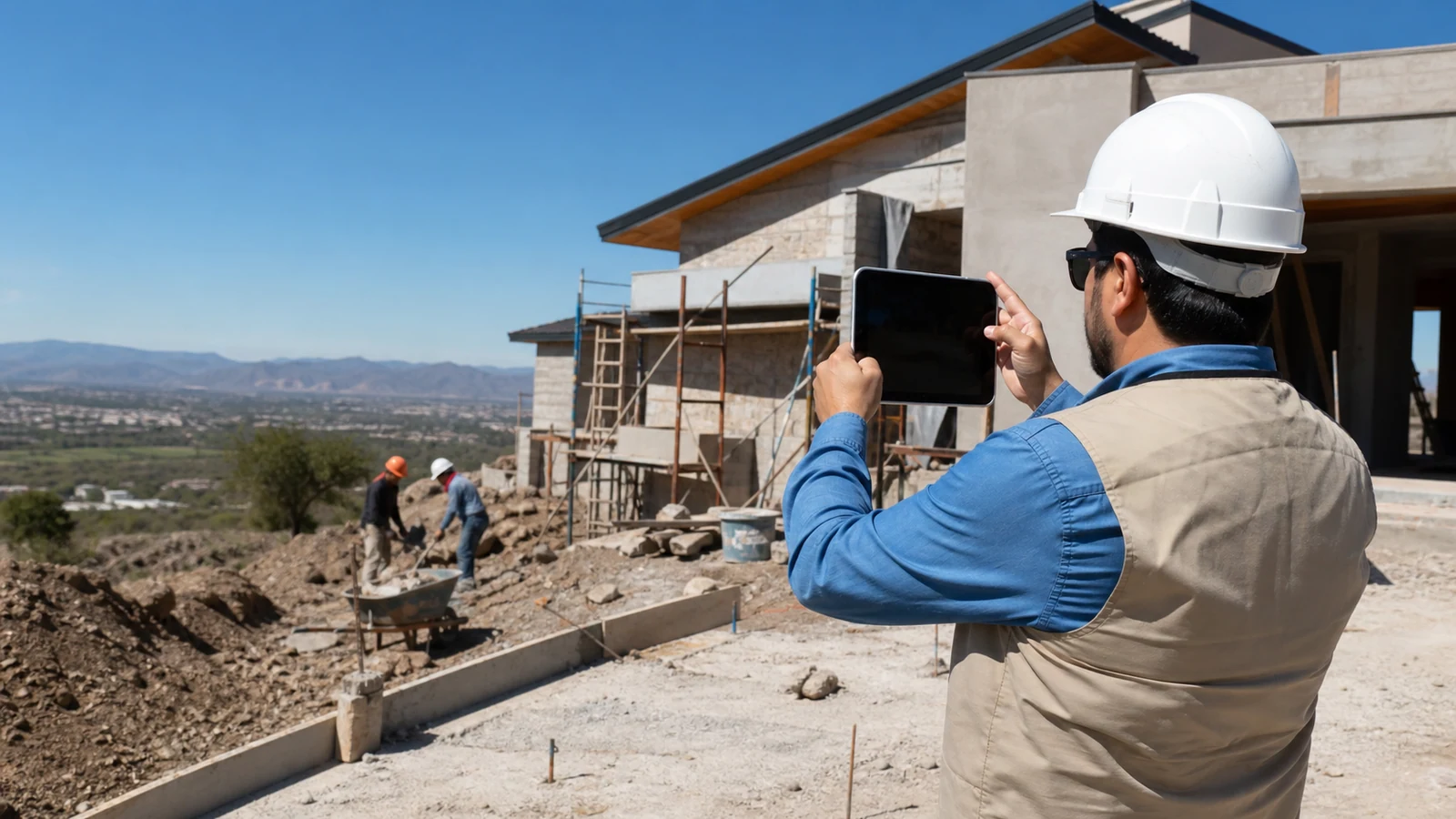
Progress evidence must go beyond attractive photos
Useful construction follow-up shows which milestone was completed, when it happened and what comes next. Transparency reduces anxiety and helps make timely decisions.
This applies to both pre-sale homes and development urbanization.
Evidence that truly helps
- Photos with wide context, not only tight details.
- Date, stage and brief explanation of progress.
- Record of changes approved by the client.
- Next milestone and estimated review date.
Organized communication
Ask for follow-up to stay in one channel with clear responsible parties. When everything is scattered, doubts and agreements become harder to verify.
Agree on a baseline before the first report
Progress tracking needs current drawings, scope, budget, schedule and identified responsible parties. Divide the work into observable milestones linked to deliverables rather than only broad percentages. Define the reporting frequency, channel and person responsible for questions. A photograph without a date or location provides little context. The baseline makes it possible to distinguish actual progress, remaining work and changes requested after construction began.
Request consistent evidence with an explanation
A useful report states the date, work area, completed activities, next steps, decisions required, risks and photographs from comparable viewpoints. Work that will be concealed should be recorded beforehand. When payment depends on progress, confirm how it will be measured and approved. Some work cannot be assessed later; retain evidence of services, waterproofing, reinforcement and tests before walls or finishes are closed. Evidence should correspond to the contracted project.
Record changes and delays with their full effect
Every change needs a description, reason, cost, schedule effect and approval before execution. When a delay occurs, the report should identify the cause, affected activities and recovery plan instead of offering an improvised date. Keep a decision log and issue a summary at the end of each stage. This system improves communication but does not replace technical supervision, warranties or contract duties; those responsibilities must be defined for each project and reviewed by qualified professionals. Keep receipt of every update.
A report should let someone repeat the review
Require every photograph to show a date, location, work area and link to the schedule. The report should compare planned, completed and outstanding scope. A selection of attractive images may hide stalled areas. Request marked drawings or diagrams showing where progress occurred and which inspection accepted it.
Connect payments to observable deliverables rather than reported percentages. When work deviates, record the cause, owner, impact and recovery date. Keep earlier reports to identify shifting criteria. Transparency works when another person can review the same evidence and understand why a payment or extension was approved.