The visit should end with clarity
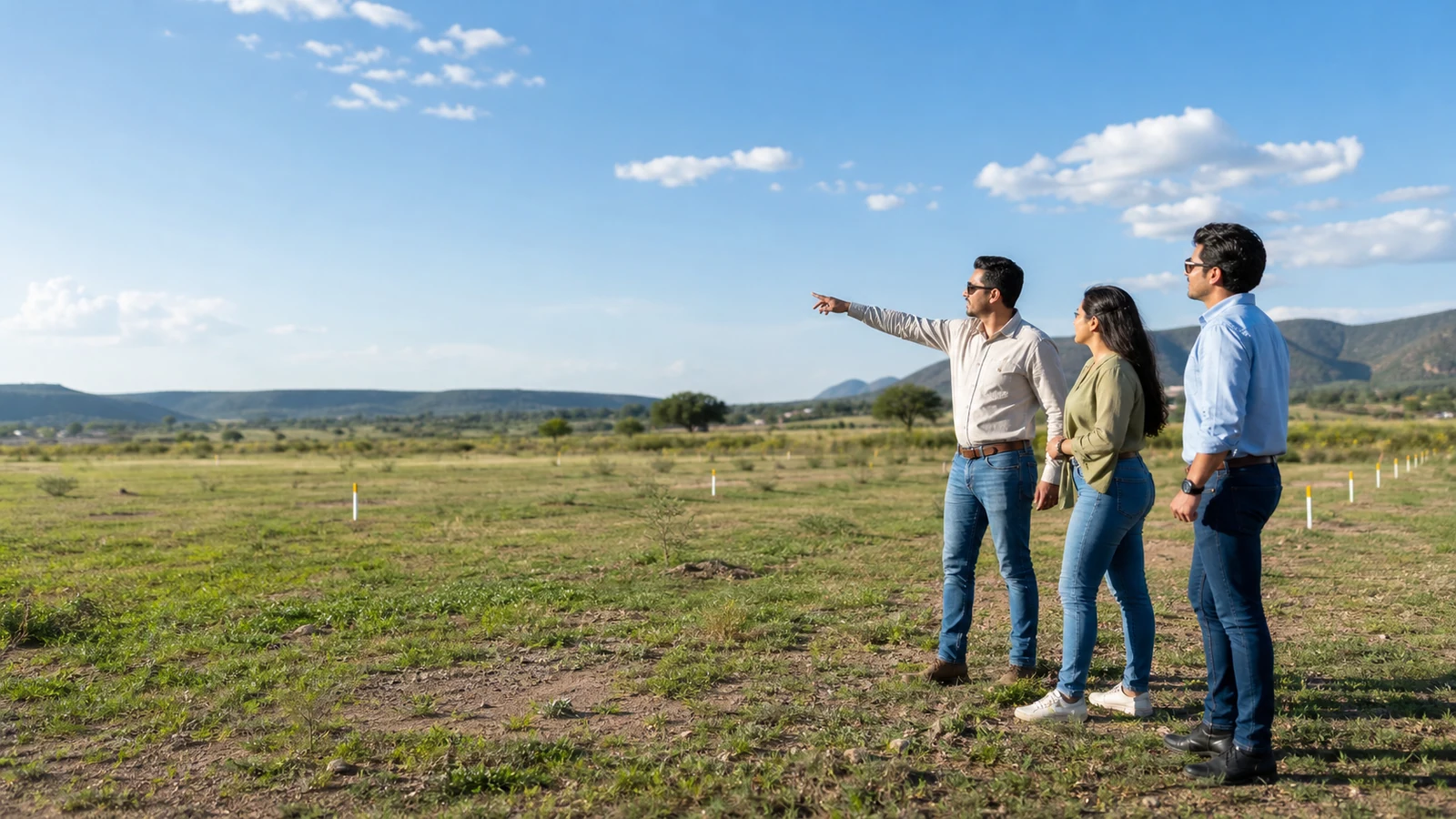
A useful guided visit explains access, utilities, development stage, payment terms and next steps instead of merely pointing at available lots.
Before going, decide whether you want to build soon, invest for the medium term or compare areas. That intent changes the questions that matter.
Questions worth bringing
- What is included in the price and what is paid separately.
- When the contract, deed or rights transfer is formalized.
- Which utilities are available today and which depend on stages.
- Which construction restrictions apply inside the development.
| Aspect | Ask the guide to show | Record in your sheet | Comparison result |
|---|---|---|---|
| Access | Actual entrance and arrival route | Road condition and travel time | Viable, conditional or pending |
| Land development | Installed utilities and phased works | What exists today, target date and responsible party | Available, dated commitment or undefined |
| Lot | Boundaries, dimensions and orientation | Identifier, area and photographs | Matches or needs clarification |
| Restrictions | Use, setbacks, height limits and development rules | Document and current version | Compatible or requires redesign |
| Total price | Inclusions, additional costs and payment structure | Validity, monthly payment and initial outlay | Within budget or incomplete quotation |
| Follow-up | Available documents and contact channel | Responsible person and response date | Complete information or second visit required |
What to take back with you
Ask for a sheet with location, price, payment structure, dimensions, validity and follow-up contacts. If you visit more than one lot, use the same format to compare them without relying on memory.
Define the purpose before booking
A guided visit is more productive when the advisor knows your objective, general timeframe and intended purchase approach. Explain whether you plan to build soon, hold the land or compare developments, and mention the group size or any accessibility needs. Request the meeting point, estimated duration, road conditions and suggested documents in writing. Availability, prices and schedules can change, so confirm them directly when booking.
Use the same agenda for every lot
Ask the guide to cover access, dimensions, orientation, development stage, available utilities, building restrictions and the document process. When visiting several options, spend similar time at each and take photographs from comparable viewpoints. Review the approach and departure as well: crossings, lighting, slopes, transport and distance to everyday services affect the experience. A useful commercial visit should support comparison instead of showing only the most visible lot.
Finish with specific next steps
Before leaving, request a current sheet stating the lot identifier, area, price, payment method, utilities, available documents and the validity of the information. Record who will answer each open question and through which channel. You do not need to decide during the tour; review the material calmly and request another visit if conditions change or important details remain unverified. To book with CIRSA, use the contact channels published on the website and confirm the project you want to visit. Keep the confirmed details with your comparison record.
Do not let the seller control the entire route
Ask to see the everyday entrance, the exact lot and the infrastructure supporting each promised utility. If the tour avoids a street, boundary or unfinished phase, request that it be included. Save the lot location and photograph its identifier beside permanent landmarks. This reduces the chance of remembering a different property from the one quoted.
Before leaving, repeat the main facts: block, lot, area, price, phase, utilities and expected delivery date. Ask the adviser to confirm in writing any answer that affects your decision. A useful visit ends with fewer unknowns and named follow-up tasks, not a folder of photographs with no context.