
It is not only a legal requirement
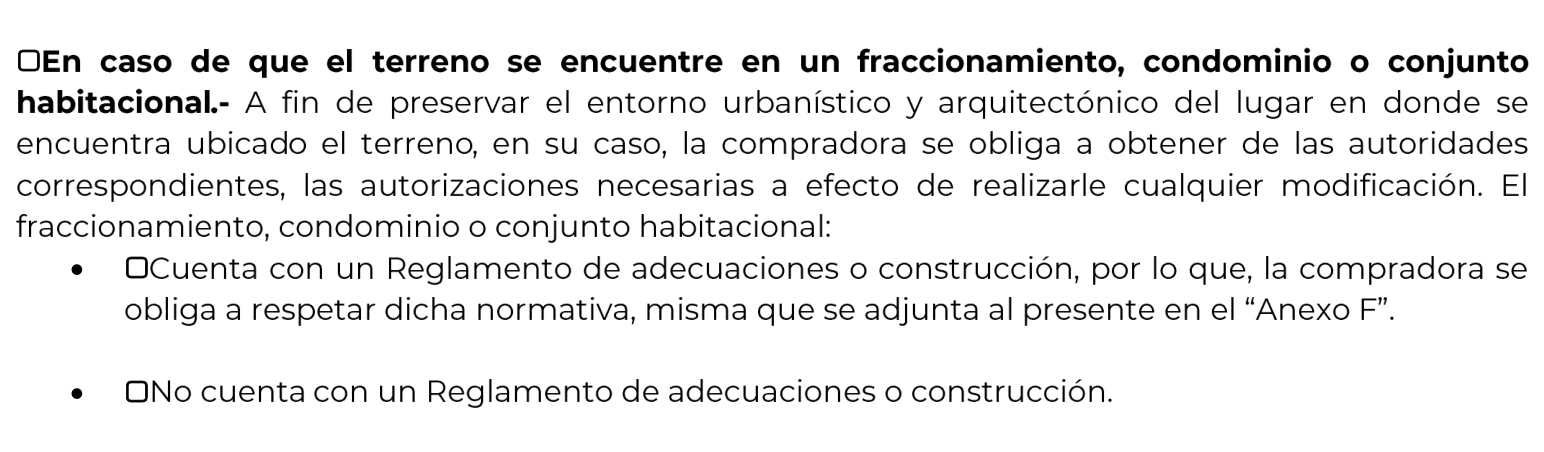
The regime or rules of a development define how common areas are used, what can be built, which fees exist and how collective decisions are made.
Reading it before buying prevents later conflicts with neighbors, administration or builder.
Points to review
- Ordinary and extraordinary fees.
- Rules for facades, walls, expansions and permitted uses.
- Maintenance of streets, gardens, access points and common services.
- Sanctions, administration bodies and owner obligations.
Compatible purchase
If the rules match your lifestyle and project, the regime adds order. If they do not, it is better to know before signing.
Documents that should tell the same story
Before signing, compare the available deed or title, the recorded regime, the rules and the sales sheet. The property name, private area, ownership percentage, parking spaces, storage and exclusive-use areas should be consistent. Identify who owns the common areas while the development is delivered in stages and when responsibility transfers to the owners' administration.
Request a readable copy instead of relying on verbal summaries. If the rules refer to exhibits, plans or ownership-percentage tables, include them in the review. A difference is not automatically a defect, but it does call for a documented explanation before money is committed.
Fees and decisions that affect the budget
The monthly fee is only one part of the cost. Ask how the annual budget is approved, whether a reserve exists for repairs and under which rules special assessments may be imposed. Request examples of covered services and expenses paid directly by each home.
- Confirm when charges begin and whether the unit has outstanding balances.
- Review who manages the property, the term of service and reporting duties.
- Identify voting thresholds for works, use changes or new amenities.
- Ask how late payments, damage and misuse of common areas are handled.
Test the rules against your actual plan
Turn your plans into concrete questions: adding a bedroom, installing solar panels, fitting security bars, keeping a pet, renting or working from home. Check whether each activity is allowed, requires approval or carries design, noise or schedule conditions. This shows whether the property fits your life, not only your budget.
Before closing, document any authorization offered by sales staff or management. Rules can protect maintenance and neighbor relations, but their value depends on being clear, enforceable and understood by every owner.
Read the condominium regime as a budget and decision map
Identify the private unit, common areas, percentages, parking, restrictions and governing bodies. Compare the regime plan with the offered home. Ask which decisions require a vote, who collects fees and how work is approved. A shared amenity also creates payment, use and maintenance obligations.
Request rules, budget, account statement and available minutes when the condominium already operates. Review arrears, disputes, reserves and upcoming repairs. Include the fee in monthly housing cost. If the regime is still being formed, request dates, documents and the person responsible for the first owner handover.