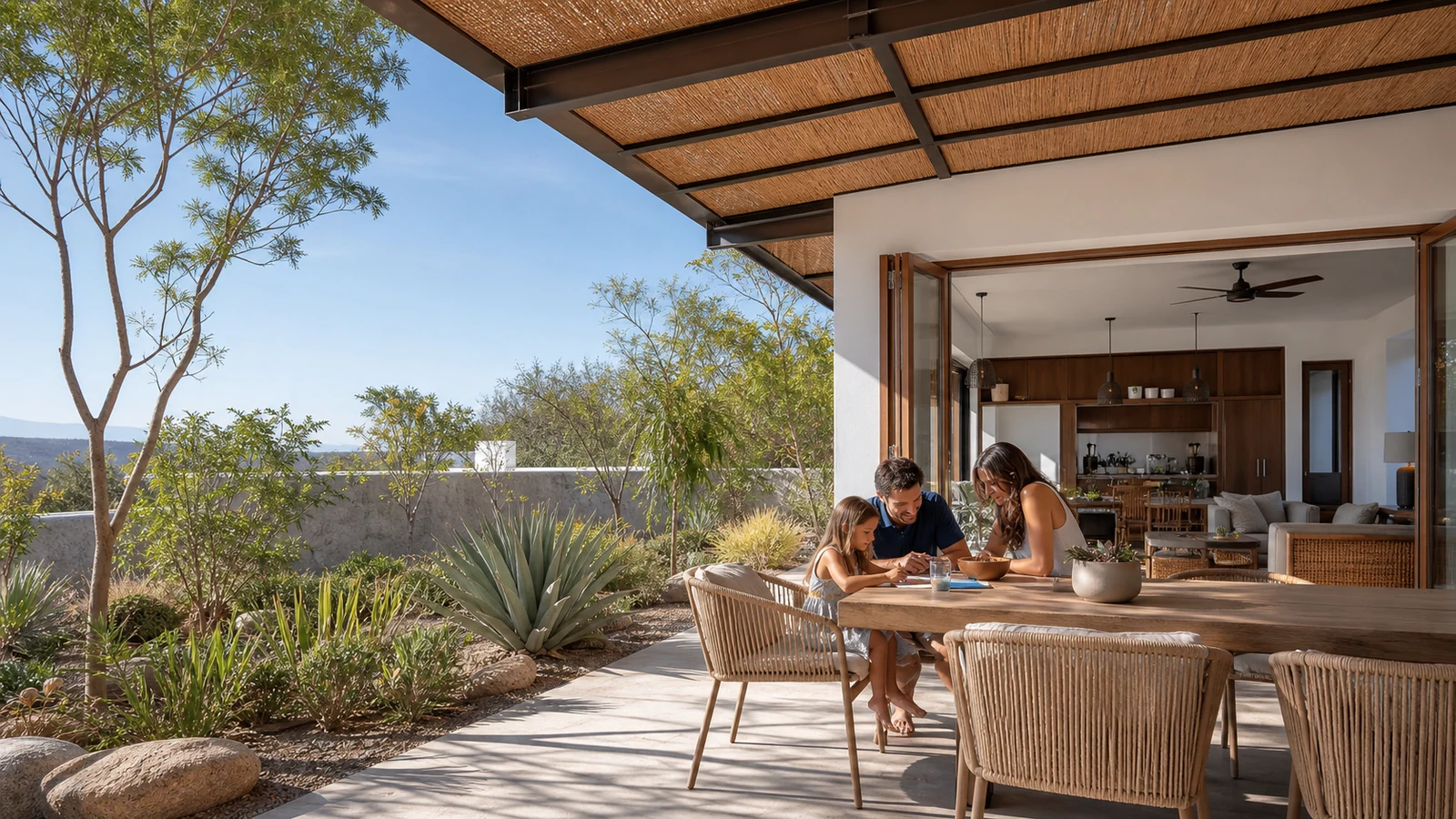
The patio is becoming central again
Families want outdoor spaces they truly use, not decorative leftovers. In a dry climate, shade and ventilation can make a home feel cooler without relying on equipment all the time.
A well-planned patio also improves light, privacy and everyday living.
Elements that add comfort
- Window orientation that supports cross ventilation.
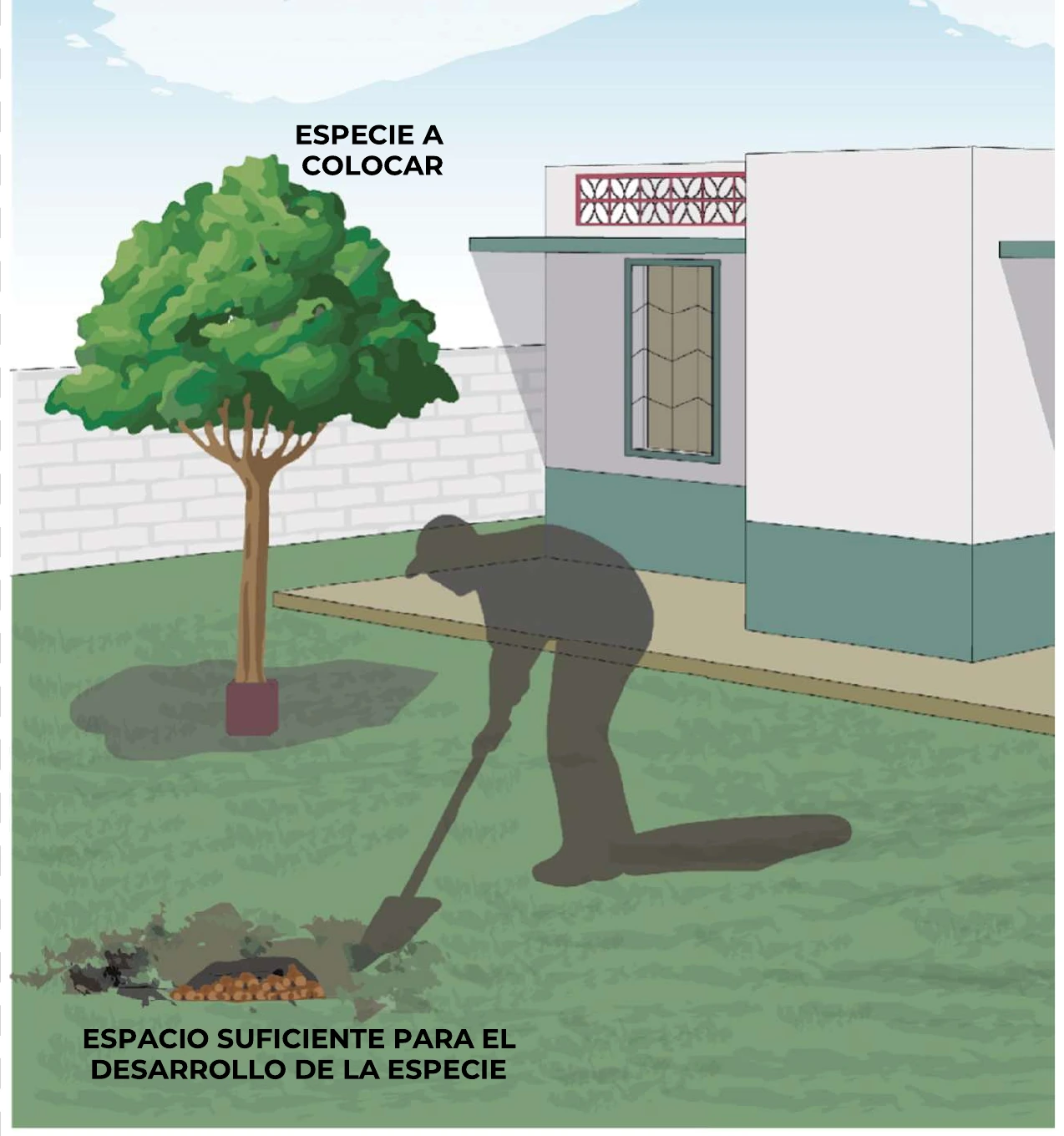
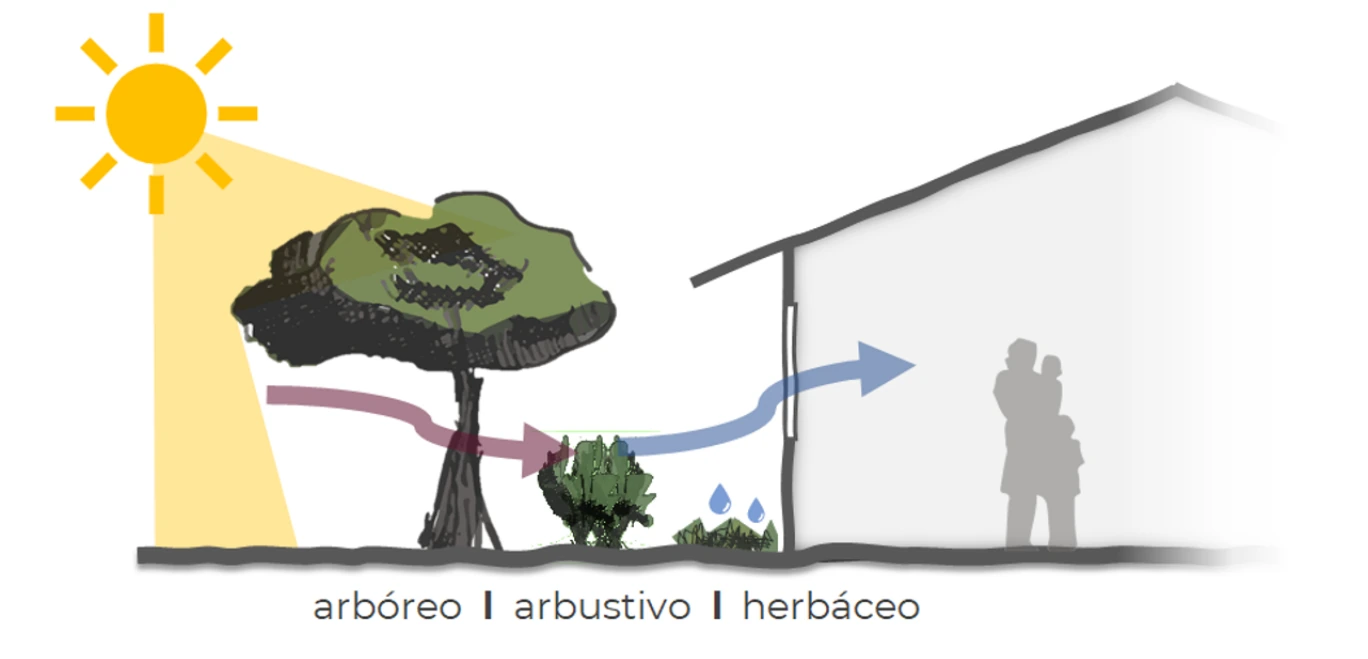
- Pergolas, low-water trees or screens where sun exposure is strongest.
- Outdoor floors that do not retain excessive heat.
- Clear separation between social, service and rest areas.
What buyers can use
When visiting a home, do not look only at finishes. Ask how sun enters in the morning and afternoon, which spaces receive shade and how bedrooms and living areas ventilate.
Evaluate the patio by time of day and orientation
Observe which areas receive morning and afternoon sun, where shadows fall and whether seating areas match the hours of use. A large patio may be uncomfortable without protection, while a compact one can work well through proportion, planting and circulation. Record orientation with a reliable tool and revisit when possible; a cloudy visit does not represent the entire year.
Check the ventilation path
Look for air inlets and outlets on different façades or spaces instead of relying on one large window. Doors, corridors, insect screens, privacy and security determine whether cross-ventilation can be used every day. Ask how kitchens, bathrooms and bedrooms ventilate when doors are closed. Natural ventilation should work with shade and solar control; adding unprotected glazing can also increase heat gain.
Prioritize maintainable solutions
Compare overhangs, pergolas, screens, suitable trees, awnings and glazing by cost, durability, cleaning and repair. Do not block drains or place vegetation where roots or moisture could affect walls and services. Define permeable areas and a safe rainwater outlet before decorating. When buying a completed home, request window and shading specifications; when building, include solar and ventilation analysis in the initial design instead of treating it as a later correction. Record expected upkeep, replacement access and seasonal use for each option. This creates a practical comparison between design intent and everyday operation. Review this record each season.
Check shade at the hardest hour
A patio may feel cool in the morning and remain exposed throughout the afternoon. Review the sun path, wall height, orientation and heat-reflecting surfaces. Request a simple view or study for June and December. The answer may combine a tree, pergola, overhang and wall, but it should preserve airflow and maintenance access.
Test the relationship with doors and windows too. Air needs a useful inlet and outlet. A large opening facing a nearby wall may move very little air. Consider privacy, dust, noise, security and rain. A comfortable patio works for several hours and allows shade or ventilation to change with the season.